Blog Assignment

Saturday, March 30, 2019

Week 11: Thailand votes in first post coup election

Summary: 
Thailand is having its first election since the 2014 military coup which dissolved the constitution and ousted the prime minister. 7 million new voters between 18-26 are eligible to vote for their first election since the coup that occurred in 2014. During the coup, the military seized power from the ruling party led by prime minister Thaksin Shinawatra. Currently, Mr. Thaksin must live in a self-imposed exile in order to avoid convictions of abuse of power. He was ousted by the military due to this in 2014. However, he still holds significant influence as the only candidates for election are his allies and members of the military party. 
Previous Prime Minister Thaksin Shinawatra.
However, the elections are not entirely free. Initially, when the army seized power it said it would immediately restore freedom and democracy yet it repeatedly postponed the vote. For the past 5 years, the country has been run under a military junta. Even now the military controls the entire Senate. In this election, citizens will be able to vote for members in the 500 seats lower parliament. These members combined with the Senate will vote for the Prime Minister who will lead the country. To win the candidate will need 1 more than half of the votes in both houses giving military candidate Gen Pryuth a huge advantage as he only needs 126 votes to win. Also, elected leaders are required to follow the military's 20-year plan and there is a limit of seats that one political party can have. All in all, even with all of these negatives, this is a positive move in the direction of democracy for Thailand and voters are excited with an 80% voter turnout.

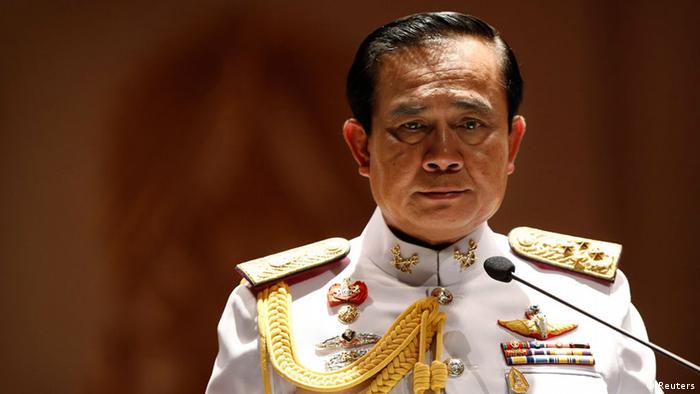
Genral Prayuth


Reaction: 

I was very interested in the irony of how the military took over to stop corruption and ended up being corrupt. I had no idea that Thailand was in the midst of a military coup and it opened my eyes to how a lot of the world does not have the freedoms that we do in America. It also surprised me how eager people were to vote even though the military controls a majority of the government. 80% voter turnout is way higher than America and our votes have much more value to how our government is shaped.


Connection to CWS:

This connects to our authoritarian leaders unit as Thailand was run under an authoritarian government for the past 5 years and still is not completely free yet. In the authoritarian unit, we learned about past examples of these leaders and governments and Thailand provides a current day example. It also connects to our study of Cuba during the cold war as the government is was a military junta similar to the Cuban government before Castro took over. 

Questions:
1.) Do you think the Thai elections are free and fair why or why not?
2.)Do you think the Thai military will ever fully restore democracy why or why not?
3.)Do you think it was fair for the military to oust PM Thaksin?

WEEK 11: Caliphate Defeated but IS Remains a Threat

Summary:
The self proclaimed IS caliphate officially came to an end when US backed Syrian fighters removed militants from the last remaining IS controlled territory in Syria. At it’s peak, IS controlled large chunks of land in the north, bringing about brutal rule on about eight million people. Even though all of IS territory has been recaptured, the terrorist organization is not dead. If US pressure is not maintained in the area, it is estimated that IS can resurge in the next six to twelve months. This has prompted President Trump to not remove all 2,000 US soldiers from the country. IS is not described as a “covert network, meaning that they are in a phase of reorganization and are setting up cells. These sleeper cells are groups of terrorists spread over different locations that will hide within a population and attack when given a signal.
The prosecution of the Yazidi religious group brought the US into the war, leading to a coalition of more than 10 countries. IS counties to generate revenue and is estimated to have between 50 and 300 million dollars in cash. There are many militants tied to IS around the world, but it is difficult to find legal evidence to prosecute them. Many key cities in Syria have been recaptured through coalition air strikes, with Raqqa, Mosul, and Hajin being hit with the most. Since air strikes are not precise, almost ⅓ of all deaths (112,600 out of 371,000 total) have been civilians. About 11 million Syrians have been displaced, either going to Europe or surrounding countries. Turkey has taken the most refugees, coming in at about 4 million. Since the IS caliphate has been deteriorating for a while, about 4 million people have returned home. Sadly, because of the destruction of property and limited resources, many people still cannot go home.
Reaction:
Personally, I feel relieved that IS has lost all their territory and that people can start to move back to their homes. As cliche as it might sound, this win emphasizes the power of teamwork, as there were many groups involved into making this victory possible. Through coalitions and a mutual goal, many different countries came together to defeat the terrorist group. When I was reading this I felt a sense of pride because of the leadership role of the US, but what still worries me is the threat of sleeper cell or terror attacks in different parts of the world. Even though IS now doesn’t have land, they still have ideals that have influenced many people around the globe. But these influenced people are often very hard to find, meaning that these attacks are hard to predict and prevent.

Connections:
This connects to World War Two and the Israel/ Palestine conflict. In World War 2, ⅔ of the total deaths were by civilians, and while not that high in this conflict, ⅓ is still a very high civilian casualty rate. In both conflicts, civilians were caught in the middle and paid a huge price. Another connection to World War 2 is the alliances. In both, WW2 and this war, many countries came together to defeat the opposing side. In WW2, the allies put aside their differences and defeated Nazi Germany. Here, countries banded together through coalitions to fight and defeat a mutual enemy. This also connects to Israel/Palestine because one of the obstacles to peace was the fear of terrorist groups. If these groups can be defeated, with this victory being an example, does that mean that there is a possibility of this obstacle being removed?

Questions:
  1. Do you think President Trump should remove all the US soldiers from Syria?
  2. How do think that countries can combat sleeper cells?
  3. What is a more precise way (not air strikes) to combat terrorist groups so the least number of civilians die?
  4. Do you think it is safe and worth it for people to start returning to their homes?
Other sources:

Friday, March 29, 2019

WEEK 11: Trump Acceptance Of Israeli Control of Golan Sparks Protests

Primary Article

Secondary Articles- 
Jerusalem Post
Syrian Arab News Agency

"Participants in the stand indicated that Trump’s declaration is part of the conspiracy and the hostile war wage against Syria" -Syrian Arab News Agency
Summary: 
After reversing half a century of US policy towards Israel on monday, the 25th, President Trump has sparked protests and universal international criticism from enemies and close allies of the US. Since Israel's occupation of the Golan in 1967, the EU has stood by their statement not to recognize Israeli sovereignty. It is generally agreed that this occupation is a blatant violation of international law and the UN charter that reprimands annexation of a territory by force. This decision makes the US the first country to officially recognize the Golan as Israel's; the international community regards the Golan as occupied territory.

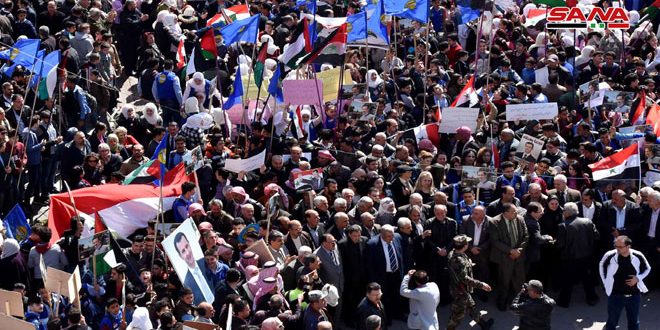
Syrian protesters carry Palestinian flags in protest to Trump's decision on Tuesday. Photo by Syrian Arab News Agency

On Tuesday, thousands of Syrians gathered to protest Trump's decision. Syria disregarded the US decision as essentially worthless. As stated by the SANA, Trump's decision "...is null and void and it doesn’t change the fact that the occupied Golan is inseparable part of Syria’s geography and history and that it will return to the homeland...". Arab countries, organizations, and Palestinian nationalist and terrorist groups all view this move as a blatant aggression, a sure indication that this decision will bring in major setbacks to the peace process. In the words of the leader of the Hezbollah, this event proves that the United States can't sponsor the "so-called peace process", and violence is the only option left. 

Reaction:
In my opinion, this was a very poor decision on behalf of the president. US relations with Israel are in a good enough place that further negotiations such as this are unnecessary, and in this case the negotiations were at the expense of a country the US already has poor relations with. The already chaotic western Arab states are now inflamed, and for them, peaceful communication appears less and less possible, especially with a "mediator" that appears to completely disregard them. I can't foresee anything good resulting from this decision.

Connection:
Clearly this connects to our focused notes on the Golan last week as well as our entire I/P conflict unit. This event is a major setback for the peace process as a whole and possibly eliminates the US as a future mediator in the conflict. As we saw in Promises, a mediator can make all the difference in opening communication, and a mediator with a bias that will not provide for the needs of both sides further escalates the conflicts. This escalation is similar to Britain's supposed mediation in the 1900s that resulted in eventually picking the side of the zionists for the benefit of their own country rather than for peace.

Questions:
1.) Is there any possibility for the US to remain a mediator now?
2.) What steps should be taken to deescalate the anger of groups such as Hezbollah that view violence as the sole option now?
3.) Where do you predict the conflict will go from here? How drastically will this change affect it?

WEEK 11: Indonesia's Garuda is canceling its $4.9 billion order for the Boeing 737 Max


A Boeing 737 Max 8 from Garuda Airlines being examined in Jakarta, Indonesia.

Summary:
Garuda, an Indonesian airline, wrote a letter to Boeing (BA) announcing that they are cancelling a $4.9 billion order for Boeing's 737 Max 8 jets. They have been the first airline to cancel a Boeing 737 Max 8 order. After two recent deadly crashes in less than 5 months, the bestselling aircraft has been grounded worldwide over safety concerns, which is anticipated to harm the company of billions of dollars.

The path off Boeing 737 Max 8 flights around the globe in a week. The site of the Ethiopian Airlines crash is marked above.

The first crash, in October 29, was the first fatal accident in involvement of a Boeing 737 Max 8. The flight, Lion Air flight 610, took off from Jakarta, Indonesia, but crashed only 12 minutes later into the Java Sea, killing all 189 passengers and crew on board. Then, on March 10, the same model plane used in Ethiopian Airlines Flight 302 crashed 6 minutes after takeoff, where all 157 people abroad lost their lives. The causes of both crashes are currently under investigation.

However, investigators did notice a substantial similarity between both crashes: both planes contained a newly developed automated flight control system known as The Maneuvering Characteristics Augmentation System (MCAS), which is a plausible cause of the accident. To increase fuel efficiency, Boeing designed new engines for the Max. The control system was then developed to point the nose of the airplane downwards when it detected stalling. Most pilots were unaware of this new system or how it operated. Additionally, the pilots on the Lion Air flight may have had as little as 40 seconds to identify and fix the aircraft's probable nosedive.

A brief explanation of how the MCAS system was to be used on the airplane. The video can also be accessed here.

The 737 Max 8 aircraft is significantly the most important product of the company, and is widely popular in airlines in North America. There are multiple major airlines such as American Airlines (AAL) and Southwest (LUV) that claimed to have no plans on changing their orders for 737 Max 8. Many orders have been placed on nearly 5,000 of these planes, which is enough to keep the aircraft production queue busy for years.

Reaction:
Technology may have occasional accidents, but both crashes could have been entirely avoided. I was very shocked to find out that most pilots did not even know about the control system. This indicates the company's insufficient training of the airline pilots and poor development of the aircraft machinery, and makes us question our safety on airplane flights, which should be the primary concern of the airline. I believe that the MCAS is definitely part of the cause of both crashes since the similarities (both having the MCAS, both pointed at close angles during impact) can't just be a coincidence. Boeing should immediately look into modifying the control system and ensuring proper training for a safer flight.

Connection:
This topic can be connected to the WWII unit because during WWII, countries were constantly developing new machinery for war. Planes were very commonly used in battles, which were very dangerous, especially since the weapons being used were new and constantly being developed. Today, although with modern technology, we still do have these risks with new machinery.

Questions:
1. Was it right for Boeing to develop the flight control system?
2. Why have some airlines cancelled all orders for the aircraft while others did not?
3. Would customers trust riding on airlines that still use Boeing 737 Max 8?

Additional Sources:
https://www.nytimes.com/2019/03/22/world/asia/indonesia-boeing-737.html
https://www.nytimes.com/interactive/2019/business/boeing-737-crashes.html
https://www.youtube.com/watch?v=sEXTBZ89kyQ
https://theaircurrent.com/aviation-safety/what-is-the-boeing-737-max-maneuvering-characteristics-augmentation-system-mcas-jt610/

Friday, March 22, 2019

WEEK 10: S. Korea to investigate whether conscientious objectors played violent video games


Summary: 
After the legalization of conscientious objection in November 2018, the method to distinguish true conscientious objectors from people who just want to escape military service has been a subject of great controversy and dispute among South Koreans. But now prosecutors may have found the way to verify a conscientious objector: by checking their video game history and whether they have played violent games or not. 

Ribbons with inscriptions calling for peace and reunification near the DMZ

Because South Korea and North Korea are technically still at war, military enlistment is mandatory.  Therefore the recognition of conscientious objection has not been received by the S. Korean public and right-wing conservatives without opposition. In response to earlier rulings for objectors, the right-wing party of South Korea "put forward a bill to force objectors to perform 44 months -- double the usual length -- of service, including mine sweeping and other dangerous activities." If there is no clear way to root out men that falsely identify themselves as conscientious objectors, much harsher alternate services will be considered. 

99% of previously imprisoned conscientious objectors were Jehovah's Witnesses

An official from a prosecutors office in Jeju comments, " 'We need to verify their genuine faith. So we need to examine their personal life' ". An aspect of personal life that these prosecutors look with apparent consideration is gaming history. Not only will they check regular attendance in religious services, but will also check if the "objector" has played games that include shooting. However, this method of distinguishment is not agreed upon by human rights activists. While many assert that pacifists should not be playing and/or should not have played violent games, human-rights activists counter with the claim that violent games are a different matter from the refusal to bear arms. 


Reaction:
As a Korean-American, as a Jehovah's Witness, and as a person who has a dad that was imprisoned for being a conscientious objector in S. Korea, I feel somewhat glad but also somewhat frustrated with how things have turned out. My opinion on officials checking gaming history to verify an objector is not very solid, but I do not oppose it. I'm glad that all Jehovah's Witnesses previously imprisoned in jail are now free because I've heard of the abuse and discrimination that they face for refusing to enlist during their jail time and even when they are out. But it's nothing really to be joyful about if the alternate service is going to be 44 months of service and with the probability that it will be a dangerous activity. Also, the strong criticism from the media and South Koreans (especially men) will no doubt make this a period of great stress for conscientious objectors in general. It's a feat but not one that I am greatly happy about.


Connection:
This connects back to a lot of units that we've had in our history class. WWI, and WWII as there was compulsory military service during the two wars. But mainly the Cold War and the Israeli-Palestinian conflict because the Cold War is greatly responsible for the division of North and South Korea and perhaps even S. Korea's requirement for men to serve one's country through mandatory military service. As the main topic discussed in this article was the refusal to enlist on a conscientious basis, Daniel and Yarko from "Promises" also came up in all the connections being made. Israel also has mandatory military service and once can be exempted on religious grounds. The conflict between North and South Korea is not as severe or as disheartening as the conflict between Israel and Palestine (and defensive forces are necessary for Israel because of terrorist attacks as well as other security concerns), but if Daniel and Yarko decided not to enlist, could that action in itself have impacted how Palestinians view Israelis at least in a small scale?


Questions:
1. Do you think checking an "objector's" gaming history is an effective way to distinguish bona fide objectors from people that are deceitfully trying to avoid military service?

2. What other methods do you think will be effective in resolving this issue?

3. What types of alternative services should be provided for conscientious objectors?


Additional Sources:

Week 10: ‘Hiding in plain sight’: In quiet New Zealand city, alleged gunman plotted carnage

Summary:
          On March 15, 2019 there was a brutal shooting in New Zealand at 2 different mosques. The first was at the Al Noor mosque and the second was the Linwood mosque. The attack was carried out on Friday during prayer. The shooter (his name won't be mentioned because that is one of the reasons he carried out this attack-attention-he will simply be referred to as the shooter) shot 50 people to death, and wounded dozens of others. As the attacks were carried out, the shooter streamed the shootings on Facebook for other to see, thankfully these videos have been taken down by social media companies. Because the shooter was obviously trying to get attention for his actions, the New Zealand authorities have blurred out his face. The shooter's want for attention has made people so upset that the New Zealand prime minister said "You will never hear me mention his name"


Image result for brenton tarrant
          Three days before the shooter carried out this brutal attack, he had posted a 74-page manifesto on his twitter account. In preparation for the attack he trained with semiautomatic rifles, and worked out up to the point of lifting 440 lb weights. The 24-hour gym that he chose has a nice view of the day-care center for Muslims across the street. He used the internet to find inspiration by other white nationalists and to link up with a like-minded community.

Image result for 2017 french election
          After inheriting his father's estate he traveled the world alone and visited Turkey, Serbia, Montenegro, former Yugoslavia, and Western European countries. He visited the most brutal spots of the 1990's Balkan wars. It was in Western Europe when the shooter began to form his strong nationalistic views. He was unsettled when by the news of a young girl's death, because of a truck attack in Stockholm. The 2017 French elections also angered him, because of their border policies.
Image result for human silhouette shooting targets
          A few months after the shooters return he obtained a gun license and used it at a club that boasted itself on YouTube with it's members shooting human silhouette targets. In New Zealand this type of gun range isn't very common, and the shooting community there frowns upon these types of targets, because of its implications. The main reason that the shooter used this gun range for it's human targets so he could train and prepare for the attacks on the mosques.

Reaction:
          When I actually did more research into the shooter and the attack itself, I was shocked by the amount of preparation the shooter had put into these attacks. The shooter's motives are very clear and frankly, quite frightening. These shootings are just evidence of how devastating nationalistic ideals are to a society as a whole. The amount of preparation that the shooter had put into these attacks is very frightening, because of how devastating the attacks were. I am very glad that the New Zealand government, and most of the press is keeping the shooter as anonymous as possible, and keeping his words private. Keeping the shooter's face blurred and removing the videos he took from the internet is a step in the right direction to help avoid copycats, and honestly the U.S. should follow suite and keep it's future shooters as anonymous as possible.

Connection:
          This shooting connects to nationalistic views held by both sides in the Israeli-Palestine conflict. The shooter holds very strong beliefs in his views, up to the point where he carried out two mass shootings, killing 50 civilians. Similarly, in Israel there were many terror attacks carried out by Arabs with strong nationalistic views, up to the point where they would carry out suicide bombings. As we have seen, the conflict in Israel/Palestine still hasn't been resolved, just like how xenophobia (dislike or prejudice for those from other countries) is still a major issue, which is only worsened by strong nationalistic views. Both sides of the xenophobia/anti-Muslim conflict have carried out attacks against the other because of white-nationalistic views and strong Arab views.

Questions:

  1. Should countries make stricter gun regulations to avoid these types of attacks?
  2. Should other countries follow New Zealand's lead in keeping the shooters as anonymous as possible?
  3. Why do you think countries haven't yet adopted stricter gun laws?
Additional Sources:
           Aljazeera
           BBC


Thursday, March 21, 2019

WEEK 10: Pope Francis Compares Child Sex Abuse to Human Sacrifice


Summary
Last Tuesday there was yet another horrifying lawsuit against a Catholic bishop and diocese who have been accused of sexual abuse, more specifically involving child pedophilia. It may seem shocking that a group that prioritizes and values morality would be involved in such an alarming scandal, yet Michael J. Bransfield of West Virginia is one of many powerful religious figures that has been accused of such acts.

Bransfield, a former bishop of the Wheeling-Charleston diocese in West Virginia

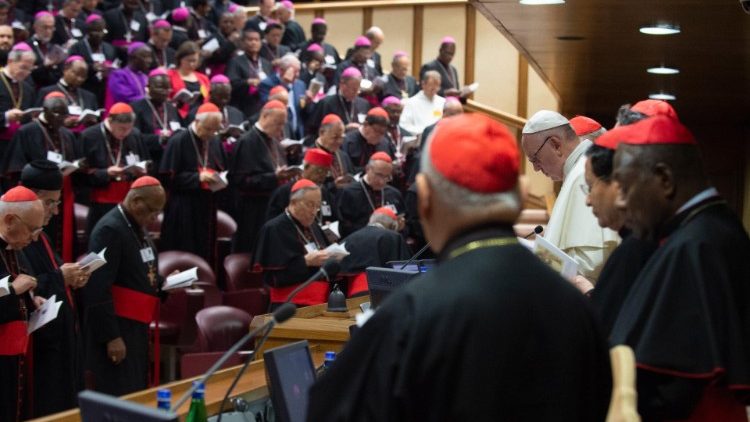
How is the Catholic Church responding to these revelations of abuse that have apparently plagued the Church for years as well as have been actively covered up by powerful, participating Church members? From February 21st through 24th, heads of all national bishops' conferences (from more than 130 countries) met alongside Pope Francis at an unprecedented Roman Catholic Church summit on pedophilia- officially known as the "Protection of Minors in the Church" conference. Taking place at the world-renowned Vatican, the headquarters of the Roman Catholic Church, the conference covered plans to handle these horrible crimes as well as covered ways to spot and end abuse for the future. Those present also heard testimonies from victims.

"Protection of Minors in the Church" Summit

Pope Francis promised to end child sexual abuse saying that guilty clergy members were "tools of Satan." He has committed to prioritizing the victims, ending cover-ups, seriously bringing all abusers to justice, and to reform and strengthen the guidelines of bishops today. Despite the Pope's forward movement, critics claim the intervention has come too late and the Church has not done enough to hold those guilty accountable after thousands of years of covering up crimes. Currently, sexual abuse survivors are asking for new protocols to protect minors and the Church itself must pick up the pieces of a crisis that has lost them all their moral authority and respect.


Connection
This certainly isn't the first, nor will it be the last, time we see leaders use their authority and respect to abuse their power and cut corners. Hitler used propaganda and his exceptional speaking skills to carry out a massive genocide. Japanese soldiers took advantage of their strength over the Chinese and brutally raped, tortured and murdered civilians during the Rape of Nanking and, like these horrifying Church scandals, history books seem to overlook the brutality of Japan's actions.

Reaction
I hope that one thing we can agree on is how absolutely horrifying these recent sexual abuse scandals are. One thing I find especially interesting regarding this topic is how many of the victims of the Church's pedophilia have actually been boys when in society we see the majority of crimes like this targeting women and girls. And while these acts are horrible, I as a follower of religion and an attendee of Church, still am trusting of the religious figures I look up to as I am unable to connect these horrible crimes to a place I find so much safety.

Questions

  1. How do you think the accused bishops and priests should be punished and what can the Church do to prevent these crimes moving forward?
  2. Do these scandals stain the name and legitimacy of Christianity and practiced religion as a whole? Why or why not?
  3. In a "Saturday Night Live" skit, comedian Pete Davidson made a controversial joke regarding the scandal, comparing the Catholic Church to R. Kelly. The Church demanded an apology from Davidson- Did Davidson take it too far and does Church even have the right to demand such an apology?     Clip included below

Other Sources: New York Times, Washington Post